Ben Nicholson
1894–1982Ben Nicholson OM (1894–1982) was one of the leading figures in twentieth-century British modernism. Moving between still life, landscape and abstraction, he developed a spare visual language of circles, rectangles, incised lines and subtly worked surfaces that brought together Cubism, Constructivism and a deeply personal response to place.
Born in Denham, Buckinghamshire, Nicholson was the son of the painters William Nicholson and Mabel Pryde. He studied briefly at the Slade School of Fine Art in 1910–11 and held his first solo exhibition at the Adelphi Gallery in London in 1922. During the 1920s his paintings were largely figurative, often concentrating on still life and landscape.
A decisive period began in the early 1930s. Nicholson became closely involved with Barbara Hepworth, whom he later married, and with the international abstract movement centred on Paris. He met artists including Piet Mondrian and Jean Hélion, joined Abstraction-Création and, in 1933, began making the carved and painted reliefs for which he became especially celebrated. By 1934 these had developed into his austere white reliefs, reducing pictorial composition to geometric form, light and shadow.
Nicholson was also instrumental in transforming the Seven and Five Society into a platform for abstraction. In 1937, together with Naum Gabo and the architect Leslie Martin, he edited Circle: International Survey of Constructive Art, an important statement of international Constructivism in Britain.
His connection with Cornwall began in 1928, when he visited St Ives with Christopher Wood and encountered the self-taught painter Alfred Wallis. In August 1939, with war imminent, Nicholson and Barbara Hepworth moved to Cornwall with their triplets at the invitation of the artist Margaret Mellis and her husband, the critic Adrian Stokes, staying initially at their house, Little Parc Owles, near St Ives. Naum and Miriam Gabo followed soon afterwards and settled nearby. This remarkable concentration of artists helped establish the foundations of the wartime modernist community in St Ives.
Nicholson remained in Cornwall until 1958 and became a founding member of the Penwith Society of Arts in 1949. The harbour, architecture and landscape of west Cornwall increasingly entered his work through softened colour, rubbed surfaces, still-life forms and abstract structures.
During the 1950s Nicholson achieved major international recognition. He represented Britain at the Venice Biennale in 1954, had a retrospective at Tate in 1955, received the first Guggenheim International Painting Prize in 1956 and won the international prize for painting at the São Paulo Biennial in 1957. In 1958 he left Cornwall for Switzerland, where the light and architecture of the Mediterranean and southern Europe became increasingly important to his later drawings, paintings and reliefs.
Nicholson’s work was shown and handled by The Redfern Gallery during the post-war period, forming part of the gallery’s wider engagement with British modernism and the artists associated with St Ives.
Nicholson was appointed to the Order of Merit in 1968. His work is held in major public collections internationally, including Tate and the Museum of Modern Art, New York. His influence on the development of abstraction in Britain, and on the artistic identity of St Ives in particular, remains profound.
Works
-
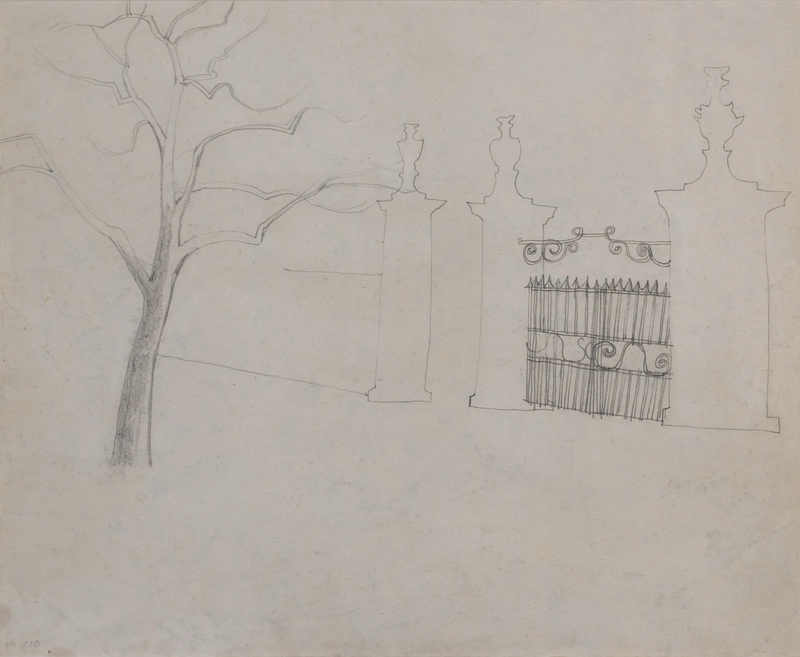 Ben NicholsonUntitled (gate and tree), 1967 (c.)Pencil on paper30 x 38 cm%3Cdiv%20class%3D%22artist%22%3E%3Cspan%20class%3D%22artist%22%3E%3Cstrong%3EBen%20Nicholson%3C/strong%3E%3C/span%3E%3C/div%3E%0D%3Cdiv%20class%3D%22title%22%3E%3Cem%3EUntitled%20%28gate%20and%20tree%29%3C/em%3E%2C%201967%20%28c.%29%3C/div%3E%0D%3Cdiv%20class%3D%22medium%22%3EPencil%20on%20paper%3C/div%3E%0D%3Cdiv%20class%3D%22dimensions%22%3E30%20x%2038%20cm%3C/div%3E
-
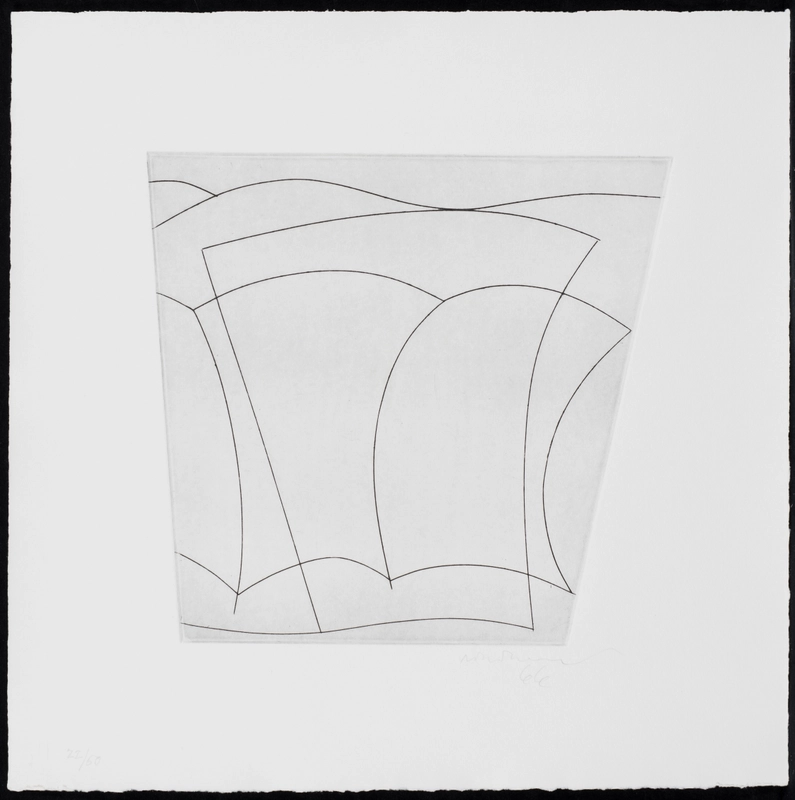 Ben NicholsonForms in a Landscape, 1966Etching20 x 22 cmFrom the edition of 50Signed, dated and numbered%3Cdiv%20class%3D%22artist%22%3E%3Cspan%20class%3D%22artist%22%3E%3Cstrong%3EBen%20Nicholson%3C/strong%3E%3C/span%3E%3C/div%3E%0D%3Cdiv%20class%3D%22title%22%3E%3Cem%3EForms%20in%20a%20Landscape%3C/em%3E%2C%201966%3C/div%3E%0D%3Cdiv%20class%3D%22signed_and_dated%22%3ESigned%2C%20dated%20and%20numbered%3C/div%3E%0D%3Cdiv%20class%3D%22medium%22%3EEtching%3C/div%3E%0D%3Cdiv%20class%3D%22dimensions%22%3E20%20x%2022%20cm%3C/div%3E%0D%3Cdiv%20class%3D%22edition_details%22%3EFrom%20the%20edition%20of%2050%3C/div%3E
-
 Ben NicholsonStill Life, 1962Lithograph44 x 64 cm%3Cdiv%20class%3D%22artist%22%3E%3Cspan%20class%3D%22artist%22%3E%3Cstrong%3EBen%20Nicholson%3C/strong%3E%3C/span%3E%3C/div%3E%0D%3Cdiv%20class%3D%22title%22%3E%3Cem%3EStill%20Life%3C/em%3E%2C%201962%3C/div%3E%0D%3Cdiv%20class%3D%22medium%22%3ELithograph%3C/div%3E%0D%3Cdiv%20class%3D%22dimensions%22%3E44%20x%2064%20cm%3C/div%3E
-
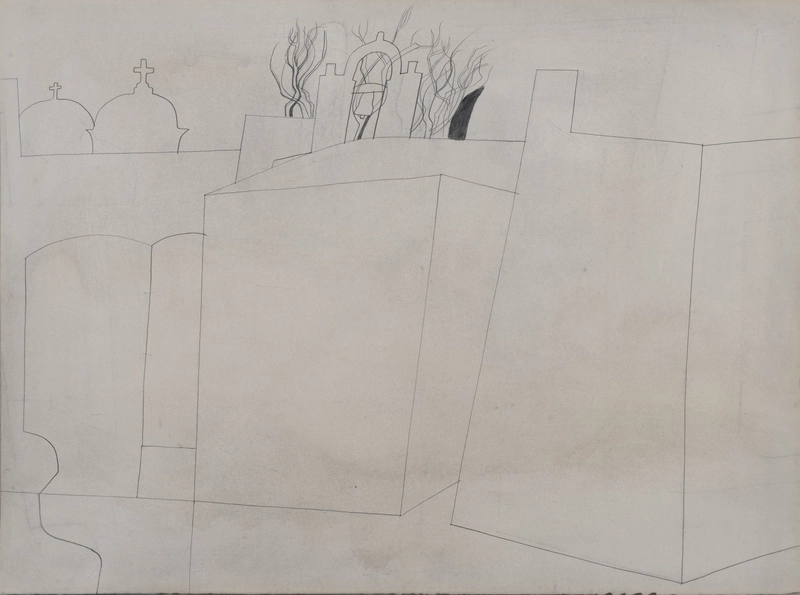 Ben NicholsonParos, Londini, 1961Pencil and wash on paper36.5 x 49 cm%3Cdiv%20class%3D%22artist%22%3E%3Cspan%20class%3D%22artist%22%3E%3Cstrong%3EBen%20Nicholson%3C/strong%3E%3C/span%3E%3C/div%3E%0D%3Cdiv%20class%3D%22title%22%3E%3Cem%3EParos%2C%20Londini%3C/em%3E%2C%201961%3C/div%3E%0D%3Cdiv%20class%3D%22medium%22%3EPencil%20and%20wash%20on%20paper%3C/div%3E%0D%3Cdiv%20class%3D%22dimensions%22%3E36.5%20x%2049%20cm%3C/div%3E
Related content
-
 Exhibitions
St Ives at The Redfern
A summer celebration of St Ives, past and present 15 Jul - 5 Sep 2026View the e-catalogue For over a century, St Ives has occupied a significant place within...Read more -
 Publications
The Redfern Gallery
Modern and Contemporary Prints - Part Two Mar 15, 2023A fully illustrated catalogue published to coincide with 'Modern and Contemporary Prints - Part Two',...Read more
-
 Publications
Spring Exhibition 1989
20th Century British Paintings, Watercolours, Drawings and Ceramics Mar 15, 2023An original, fully illustrated catalogue to coincide with The Redfern Gallery's 'Spring Exhibition 1989', held...Read more -
 Exhibitions
Spring Exhibition
Modern British Art 4 Mar - 30 Apr 2020This spring exhibition of Modern British Art includes paintings and sculpture by Eileen Agar, Alan...Read more
